
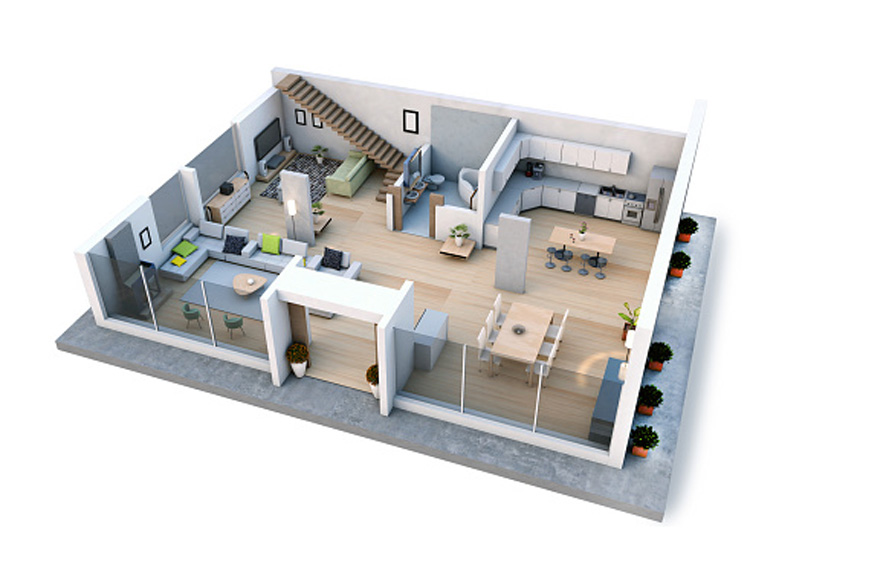
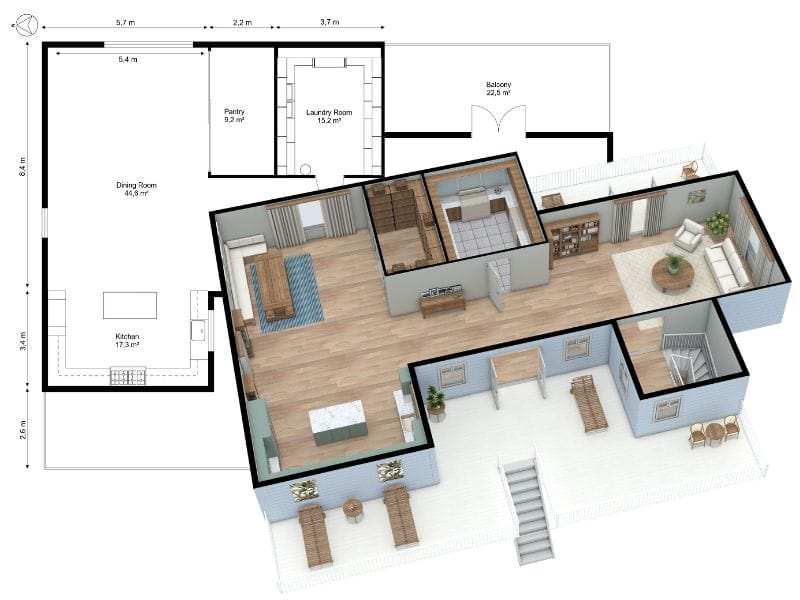
In a construction or architecture company, house planning establishes the project's foundation by defining a structure's functionality, aesthetics, safety, and budget, ensuring it meets the client's lifestyle and local regulations. It involves detailed spatial design, material selection, and ensuring the building is cost-effective, sustainable, and culturally appropriate. The result is a comprehensive set of construction drawings that guide the builder and ensure the final house aligns with the initial vision.
Key Aspects of House Planning:
Functionality and Space Utilization:
Architects design layouts to maximize the use of space, creating efficient traffic flow and defining clear purposes for each area, tailored to the client's lifestyle and needs.
Aesthetics and Harmony:
Plans consider a pleasing appearance that is in harmony with the surrounding environment, including the selection of appropriate styles, colors, and materials.
Safety and Security:
Planning incorporates features and design elements to ensure the safety and security of future occupants.
Cost-Effectiveness:
Architects help select materials and design the structure to be built and maintained cost-effectively, keeping the project within the client's budget.
Sustainability:
The planning process includes considerations for environmental sustainability, such as energy efficiency and the long-term durability of materials.
Compliance:
Plans are developed to adhere to local building codes and regulations, ensuring the project is legally sound.
Client Vision:
Architects work with clients to translate their preferences and lifestyle into a physical design, ensuring the home reflects their personality and needs.
Technical Guidance:
The detailed plans produced act as a blueprint for the construction process, providing builders with precise instructions on dimensions, materials, and installation methods.